
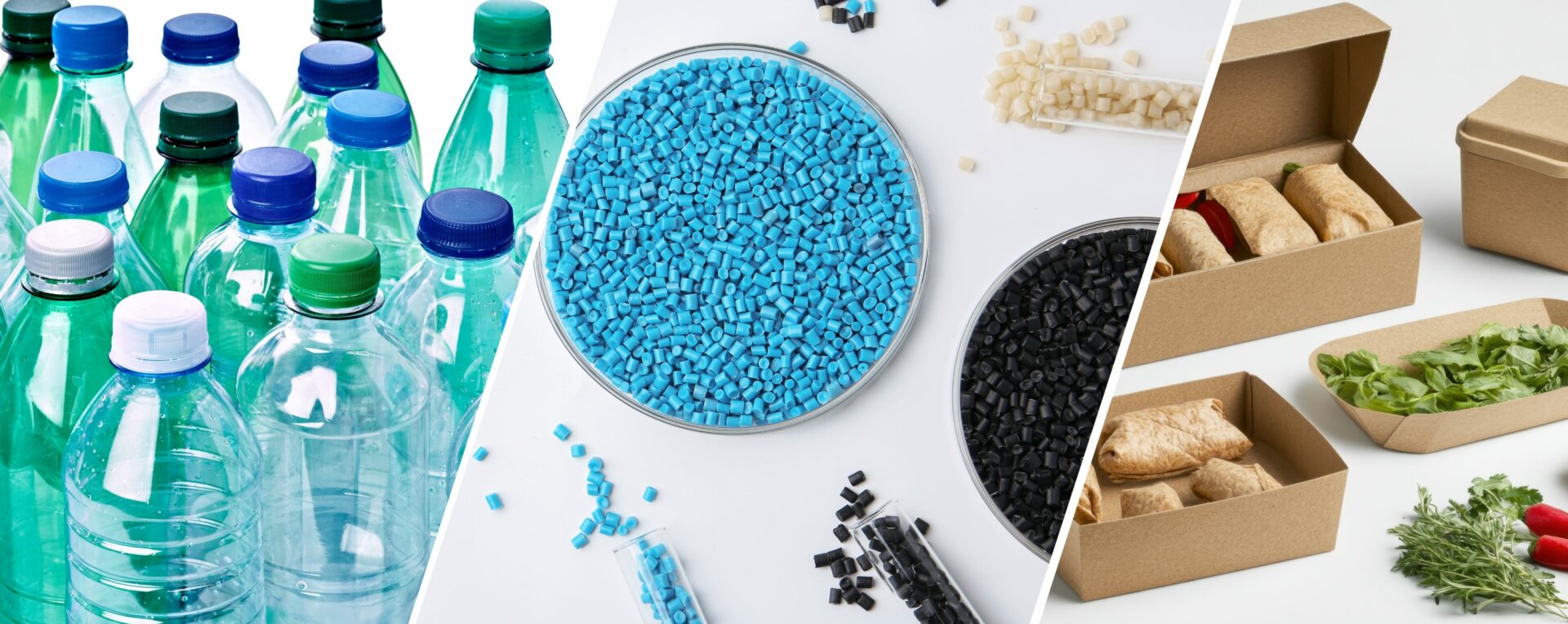
J.S. Hamilton Laboratories provide comprehensive services and accredited laboratory testing of food contact materials. Our work is performed in accordance with European regulations, in particular Regulation (EC) No. 1935/2004 of 27 October 2004 on materials and articles intended to come into contact with food.
Through our testing, we ensure the safety, compliance, and quality of materials that come into contact with food, while supporting manufacturers and distributors in meeting regulatory requirements.
We perform the following tests:
Plastic Packaging and Materials
SCOPE OF ANALYSES:
- Microbiological analyses
- Overall and specific migration in all food simulants
- Specific migration of:
- mineral oil hydrocarbons MOSH/POSH and MOAH
- isocyanates and azo dyes
- set-off effect of printing inks and specific migration of UV initiators, acrylates, BHT, PAA, etc.
- Sensory analysis in accordance with DIN 10955, EN 1230-1/-2
- Color fastness according to EN 646, DIN 53160-1/-2
- Barrier properties against gases: oxygen (OTR), water vapor (WVTR), CO₂TR
Paper and Cardboard Packaging and Materials
SCOPE OF ANALYSES:
- Determination of grammage and moisture content
- Dry residue in water extract
- Heavy metals in accordance with Directive 94/62/EC
- Metals in water extract
- Formaldehyde, pentachlorophenol (PCP), glyoxal, anthraquinone
- Primary aromatic amines
- Polychlorinated biphenyls (PCB)
- Bisphenols A, B, F, S
- Phthalates
- Aromatic ketones
- PFAS (perfluoroalkyl substances)
- Hydrolysis products of epichlorohydrin, chloropropanols: 1,3-DCP and 3-MCPD
- Isothiazolinones (CIT, MIT, BIT)
- Polycyclic aromatic hydrocarbons (PAH)
- Content and specific migration of mineral oils (MOSH and MOAH)
- Non-intentionally added substances (NIAS): GC-MS/FID, LC-QToF-MS, Headspace-GC/MS
- Penetration of antibacterial components
- Optical brighteners, EN 648
- Color fastness, EN 646
- Sensory analysis in accordance with DIN 10955, EN 1230-1/-2
- Specific migration of printing ink components
- Extraction studies according to FDA regulations (section 176.170)
- Testing according to the Toy Directive (EN 71 standards) and RoHS Directive
- Biodegradability and compostability according to EN 13432
Pharmaceutical Packaging Studies
TESTING OF PACKAGING AND PACKAGING MATERIALS FOR COMPLIANCE WITH THE EUROPEAN PHARMACOPOEIA
The JS Hamilton Laboratory offers comprehensive laboratory testing of polymer packaging materials intended for pharmaceutical packaging.
EXAMPLES OF PARAMETERS DETERMINED DURING TESTS FOR COMPLIANCE WITH THE EUROPEAN PHARMACOPOEIA:
- Identity A, B, C (including IR)
- Acidity, alkalinity
- Appearance of solution
- Substances soluble in hexane
- Absorbance
- Extractable metals
- Heavy metals such as lead
- Amides and stearates
- Phenolic and non-phenolic antioxidants
- and others
Other Food Contact Materials
METALS AND ALLOYS
Release of elements from metal surfaces based on the document “Metals and Alloys Used in Food Contact Materials and Articles – A Practical Guide for Manufacturers and Regulators” and Resolution CM/Res (2013) 9 on metals and alloys used in materials and articles intended to come into contact with food by the Member States of the Council of Europe.
GLASS AND CERAMICS
Determination of lead (Pb) and cadmium (Cd) release from ceramic surfaces intended for contact with food, in accordance with Directive 2005/31/EC of 29 April 2005 amending Council Directive 84/500/EEC.
Glass: Determination of lead and cadmium release from silicate surfaces that are not ceramic.
SILICONES
Tested in accordance with BfR Recommendation XV for silicones.
- Washable components
- Peroxide residues
- Platinum residues
- Volatile substances (HMS)
- Sensory analysis DIN 10955
- Color fastness
- Overall and specific migration
- Release of N-nitrosamines and N-nitroso substances
- Cyclosiloxanes D4, D5, D6
- Migration of elements EN 71-3
- Compliance testing according to EN 14350: Child care articles – Drinking equipment – Safety requirements and test methods