
Microbiological surface swabs are one of the most important tools for verifying the effectiveness of cleaning and disinfection procedures in the food, pharmaceutical, cosmetics and other industries. They are used to assess cleaning and disinfection efficiency, evaluate the hygienic condition of the production environment, and monitor the presence of pathogenic microorganisms.
Proper sampling enables the early detection of hygiene deficiencies, reduces the risk of product contamination, and ensures compliance with the requirements of HACCP, IFS Food, BRCGS and GMP standards.
Based on the results, it is possible to assess the risk of cross-contamination and carry out the validation and verification of sanitation procedures.
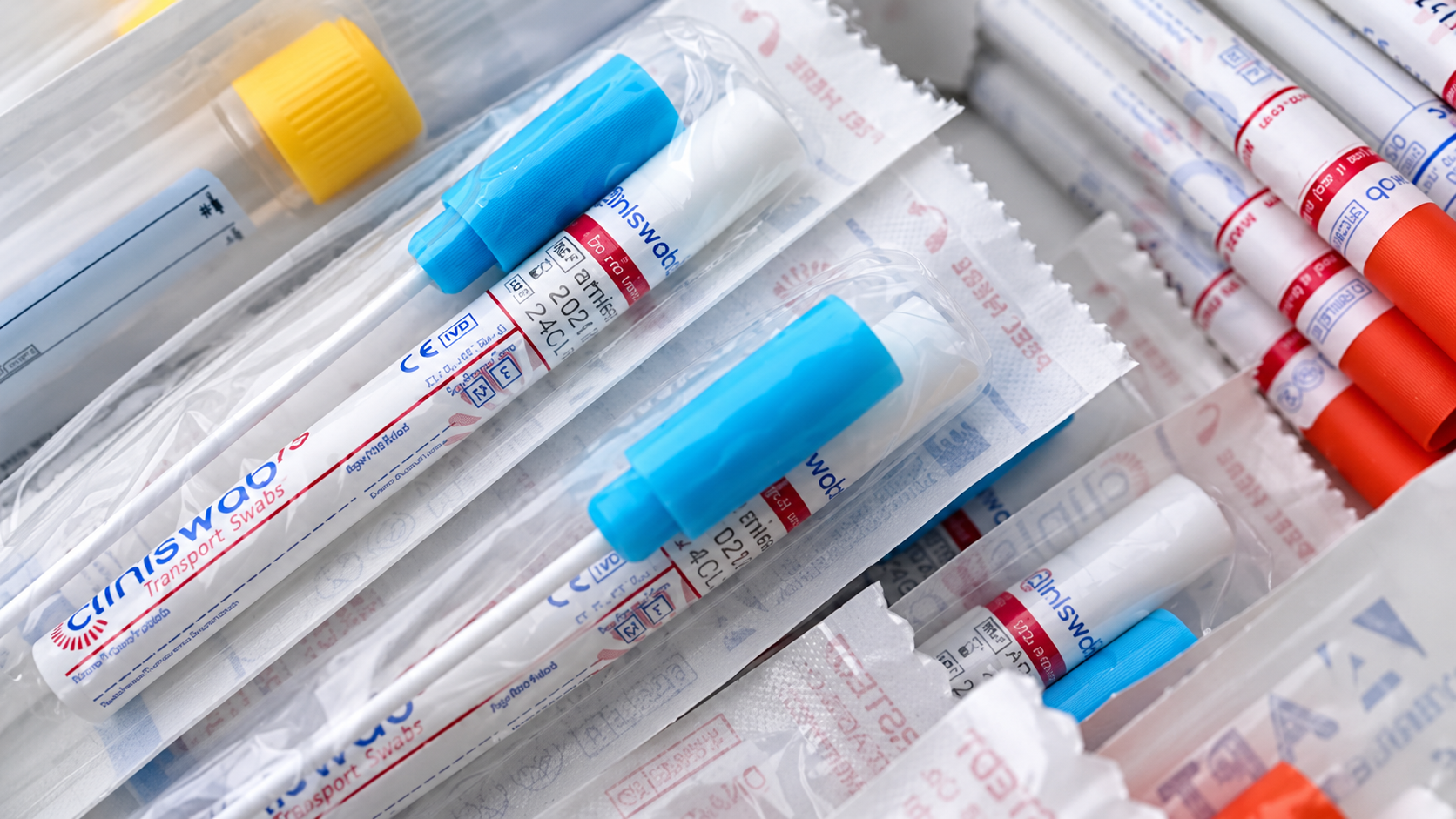
The most commonly tested parameters include:
- Total viable count (TVC),
- Enterobacteriaceae count,
- Coliform bacteria count,
- Presence or count of Escherichia coli,
- Yeast and mould count,
- Presence of Listeria monocytogenes,
- Presence of Salmonella spp.,
- Presence of allergens (gluten, milk, soy, eggs, peanuts, etc.).
The recommended sampling area is 100 cm² (10 × 10 cm), where the geometry of the equipment allows it. For smaller or hard-to-reach equipment components, a smaller, precisely defined area (e.g. 20 cm² or the entire accessible surface) may also be sampled.
Sampling locations are selected based on risk assessment, standard requirements (e.g. FDA requirements), internal procedures, and the results of previous analyses or suspected cases of microbiological or allergen contamination.
In general, sampling locations can be divided into the following categories:
Surfaces in direct contact with food: worktables, conveyors, mixers, filling lines, blades, knives, scales, funnels, filling heads, tanks, etc.
Hard-to-reach areas: joints and welds, seals, valves, drains, rubber components of equipment, dead ends in pipelines, etc.
Surfaces without direct contact with food: door handles, switches, control panels, trolleys, forklifts, protective barriers, etc.
When collecting swab samples, avoid touching the tip of the swab. Swabs should be collected from dry surfaces, and from wet surfaces only when an appropriate validated method is available. Dry swabs should be used for allergen sampling.
Try to include hard-to-reach sampling locations and avoid repeatedly sampling the same locations. We recommend preparing a rotational sampling plan. Samples must be properly labelled (sampling point, location/area, date and time, and preferably the name of the person collecting the sample). The transportation time to the laboratory should be kept as short as possible. Swab samples must never be frozen.
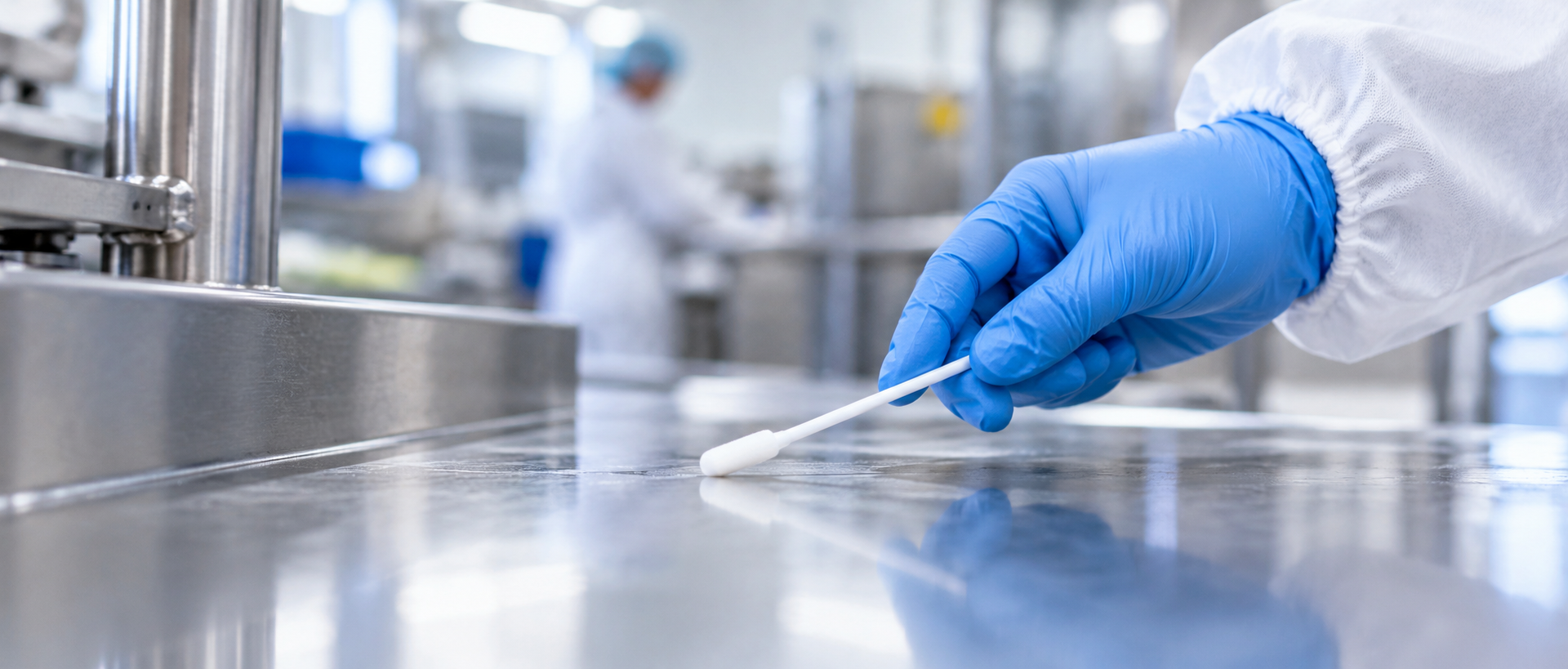
Regular monitoring of result trends enables the early detection of hygiene deviations and reduces the risk of microbiological non-compliance in products.
J.S. Hamilton also provides laboratory analysis of surface swab samples to assess the microbiological quality and hygienic condition of surfaces.