
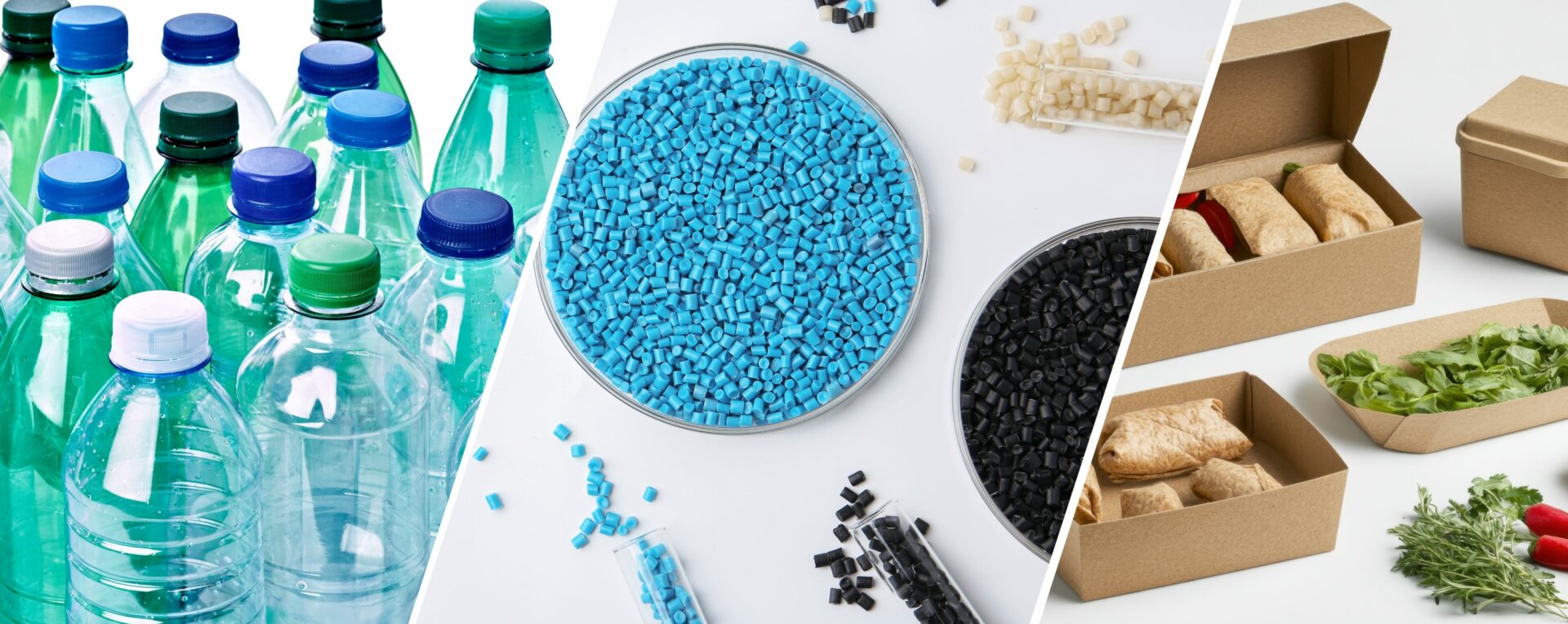
Food Contact Materials (FCM) are present in everyday life in the form of packaging, containers, kitchen utensils, and other products. When these materials come into contact with food, certain substances may transfer from the material into the food – this phenomenon is called migration.
The extent of migration depends on the type of material, the properties of the food (e.g., fat content, acidity), temperature, storage time, and the ratio between the packaging surface and the quantity of food. Excessive transfer of substances may affect food quality and pose a risk to health. Therefore, this area is regulated by European legislation (Regulation (EC) No. 1935/2004 and Regulation (EU) No. 10/2011), which sets strict migration limits.
Migration testing is performed using food simulants under standardized conditions that simulate real conditions of packaging use. This ensures compliance of materials with legislation and the safety of the final consumer.
FOOD SIMULANTS ACCORDING TO REGULATION (EU) 10/2011
- A 10% Ethanol (hydrophilic foods)
- B 3% Acetic acid (hydrophilic foods, pH < 4.5)
- C 20% Ethanol (alcoholic, more lipophilic foods)
- D1 50% Ethanol (lipophilic/alcoholic foods; oil-in-water emulsions), dairy products
- D2 Vegetable oil (lipophilic foods; free surface fats)
- or alternative simulants for D2: 95% ethanol, isooctane
- E poly(2,6-diphenyl-p-phenylene oxide) (dry foods), Tenax®, MPPO
Non-Intentionally Added Substances (NIAS)
In addition to intentionally added components, food contact materials may also contain non-intentionally added substances (NIAS), which arise as by-products of manufacturing, material degradation, or recycling processes. These substances may present an additional risk and must therefore be assessed from a safety perspective in accordance with EU legislation.
Our testing services
We offer comprehensive laboratory analyses to ensure packaging compliance and safety:
- Overall and specific migration testing in all food simulants
- Specific migration of:
- primary aromatic amines (PAA) and metals
- printing ink components
- plasticizers, antioxidants, monomers, and other additives
- NIAS analysis (GC-MS, LC-QToF-MS, Headspace-GC/MS)
- Bisphenols and epoxy resin derivatives (BADGE, BFDGE, NOGE)
- Mineral oils (MOSH/POSH, MOAH)